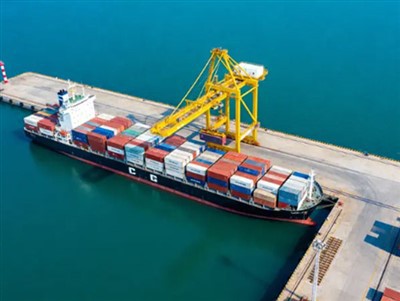


When it comes to sea freight, understanding the required documents is crucial for a smooth and successful shipping process. As a seasoned sea freight supplier, I've witnessed firsthand the impact that proper documentation can have on the efficiency and legality of transporting goods across the ocean. In this blog, I'll delve into the essential documents needed for sea freight, providing you with valuable insights to ensure your shipments are well-prepared and compliant.
Bill of Lading
The Bill of Lading (B/L) is perhaps the most important document in sea freight. It serves as a receipt for the goods shipped, a contract of carriage between the shipper and the carrier, and a document of title to the goods. The B/L contains detailed information about the shipment, including the names and addresses of the shipper and consignee, a description of the goods, the quantity, the port of loading, the port of discharge, and the terms and conditions of the shipment.
There are different types of B/Ls, such as straight B/L, order B/L, and bearer B/L. A straight B/L is non-negotiable and is issued to a specific consignee. An order B/L is negotiable and can be transferred to another party by endorsement. A bearer B/L is also negotiable and is payable to the bearer of the document.
Commercial Invoice
The Commercial Invoice is a document issued by the seller to the buyer, providing a detailed description of the goods sold, the quantity, the price, and the terms of payment. It serves as a basis for calculating customs duties and taxes and is required for customs clearance at the destination port.
The commercial invoice should include the following information:
- The names and addresses of the seller and the buyer
- A description of the goods, including the product name, model number, and specifications
- The quantity of the goods
- The unit price and the total value of the goods
- The terms of payment, such as FOB, CIF, or EXW
- The date of the invoice
- The shipping marks and numbers
Packing List
The Packing List provides a detailed breakdown of the contents of each package in the shipment. It includes information such as the number of packages, the type of packaging (e.g., cartons, pallets, drums), the gross weight and net weight of each package, and the dimensions of the packages.
The packing list is important for several reasons. It helps the carrier and the customs authorities to verify the quantity and nature of the goods being shipped. It also assists the consignee in checking the goods upon arrival and in case of any damage or loss during transit.
Certificate of Origin
The Certificate of Origin is a document that certifies the country of origin of the goods. It is required for customs clearance and may also be used to determine the eligibility of the goods for preferential tariff treatment under free trade agreements.
There are different types of certificates of origin, such as the Generalized System of Preferences (GSP) Certificate of Origin, the Certificate of Origin Form A, and the Certificate of Origin issued by a chamber of commerce. The specific type of certificate required depends on the destination country and the nature of the goods.
Insurance Certificate
An Insurance Certificate provides evidence that the goods are insured against loss or damage during transit. It is usually issued by an insurance company and includes information such as the name of the insured, the description of the goods, the insured value, the period of insurance, and the terms and conditions of the insurance policy.
While insurance is not always mandatory for sea freight, it is highly recommended to protect your goods against the risks associated with ocean transportation, such as piracy, storms, and collisions.
Export License
In some cases, an Export License may be required to export certain goods from the country of origin. Export licenses are typically issued by the government and are used to control the export of goods that are considered sensitive, such as military equipment, certain chemicals, and endangered species.
It is the responsibility of the shipper to determine whether an export license is required for their goods and to obtain the necessary license before shipping.
Other Documents
Depending on the nature of the goods and the destination country, additional documents may be required. For example, food products may require a health certificate or a phytosanitary certificate. Hazardous materials may require a dangerous goods declaration and a safety data sheet.
It is important to research the specific documentation requirements of the destination country and to comply with all applicable laws and regulations.
Importance of Proper Documentation
Proper documentation is essential for several reasons. Firstly, it ensures the legality of the shipment. Customs authorities at both the origin and destination ports require accurate and complete documentation to verify the nature, value, and origin of the goods. Failure to provide the required documents can result in delays, fines, or even the seizure of the goods.
Secondly, proper documentation helps to facilitate the smooth flow of goods through the supply chain. It provides clear instructions to the carrier, the customs brokers, and the consignee, reducing the risk of errors and misunderstandings.
Finally, accurate documentation is important for financial purposes. It serves as evidence of the transaction and is used for accounting, invoicing, and payment purposes.
How Our Sea Freight Services Can Help
As a leading sea freight supplier, we understand the complexities of documentation and are committed to providing our customers with comprehensive support. Our experienced team of professionals can assist you in preparing all the necessary documents, ensuring that your shipments comply with all relevant regulations.

We offer a wide range of sea freight services, including Ocean Freight To Hamburg, Sea Shipping From China To Vietnam Amazon Warehouse, Shipping Commodities At Sea, Sea Freight Forwarder Ddp China To Nigeria, and Shipping Solutions China To Vietnam DDP. Our services are designed to meet the diverse needs of our customers, whether you are a small business or a large corporation.
We work closely with our customers to understand their specific requirements and to develop customized solutions that are tailored to their needs. Our goal is to provide you with a seamless and stress-free shipping experience, from the moment you book your shipment to the moment it arrives at its destination.
Conclusion
In conclusion, understanding the required documents for sea freight is essential for a successful shipping process. By ensuring that you have all the necessary documents in order, you can avoid delays, fines, and other problems that can arise during transit.
If you have any questions about sea freight documentation or would like to learn more about our services, please feel free to contact us. Our team of experts is always ready to assist you and to provide you with the information and support you need.
References
- International Maritime Organization (IMO)
- World Customs Organization (WCO)
- International Chamber of Commerce (ICC)